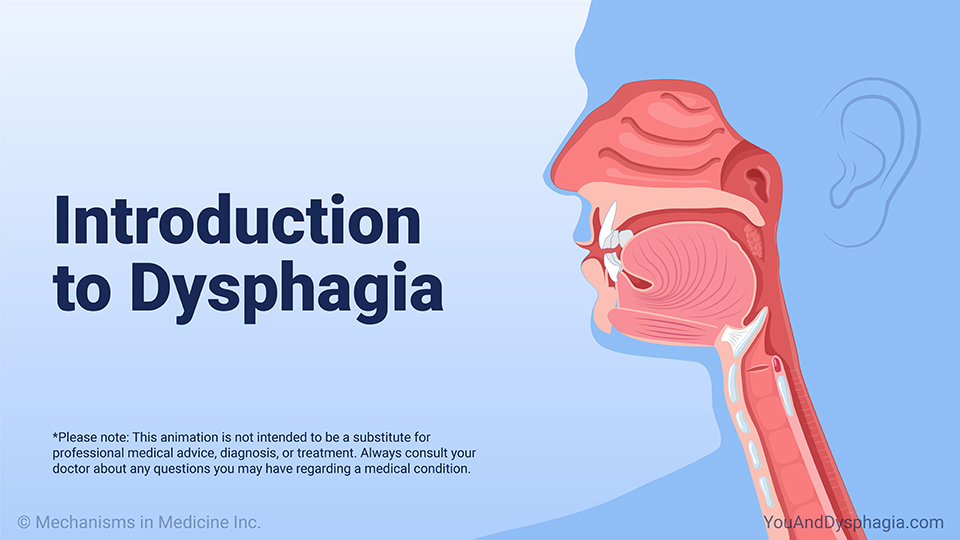
Introduction to Dysphagia — Animation
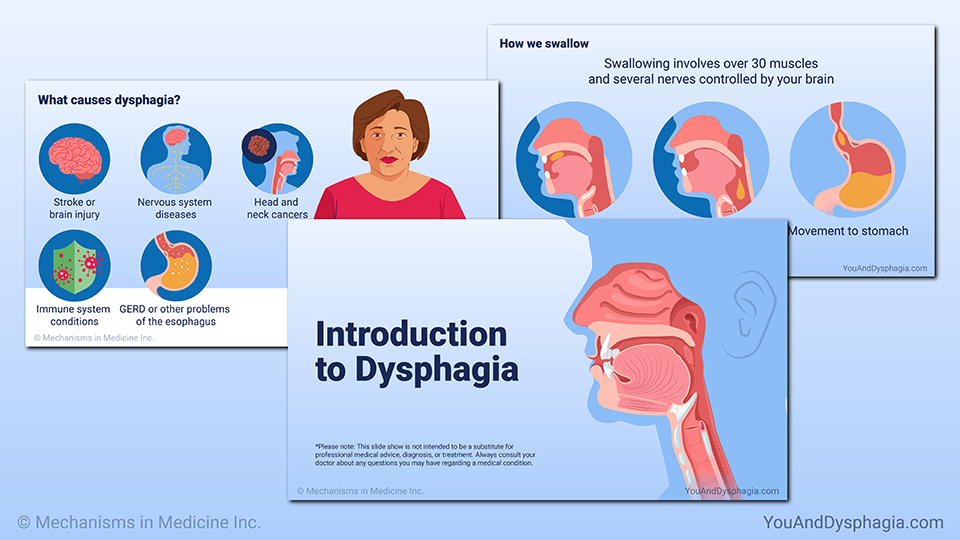
Introduction to Dysphagia — Slide Show
1. What is dysphagia, and what causes it?
2. How do we swallow?
3. What are the signs and symptoms of dysphagia?
4. What are some common problems that may develop because of dysphagia?
5. How is dysphagia diagnosed?
6. How is dysphagia managed and treated?
How is dysphagia managed and treated? — Expert Video
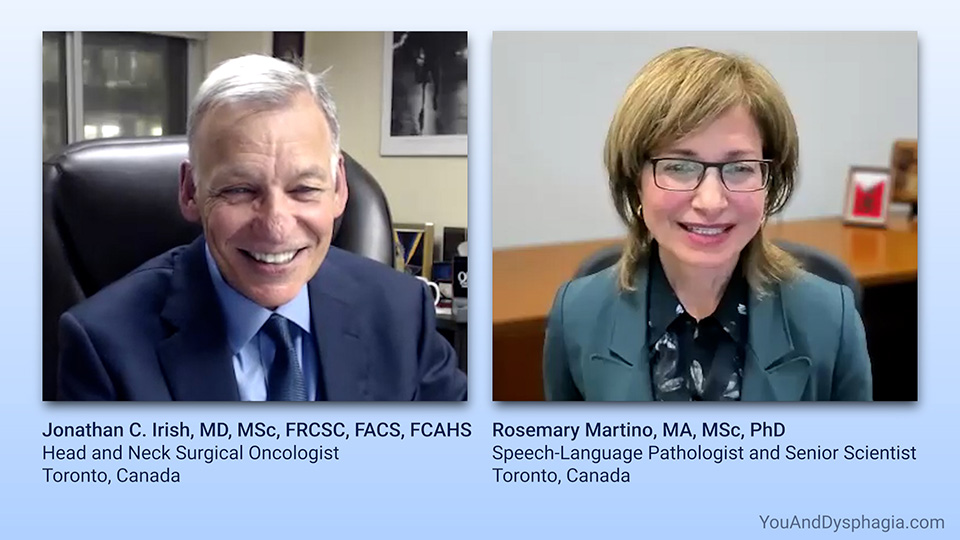
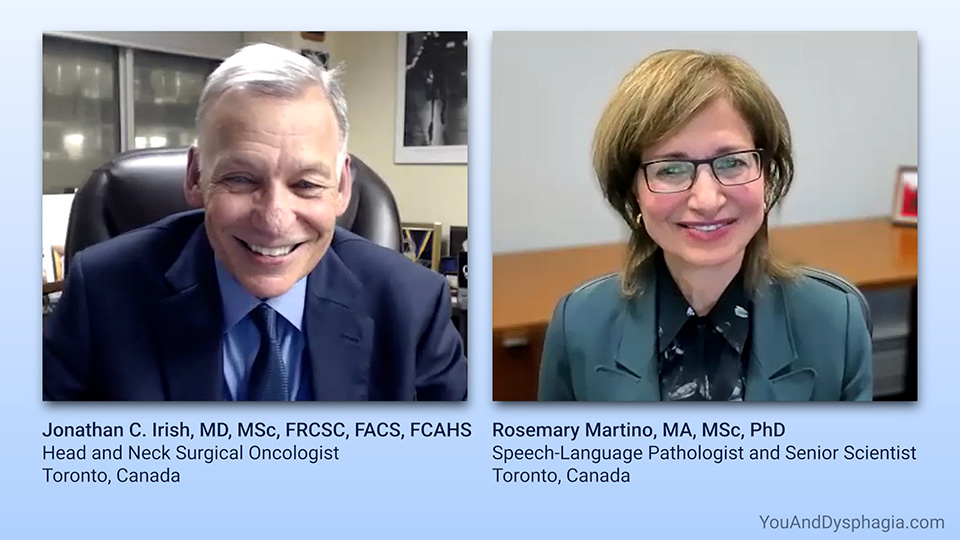
Dr. Rosemary Martino, senior scientist of the Department of Speech-Language Pathology at the University of Toronto, explains that dysphagia is managed and treated using two main approaches: compensatory strategies and active treatment. Compensatory strategies provide short-term support, such as sitting upright, taking small bites or sips, modifying food textures, or using techniques like a chin tuck to help food move safely to the stomach. Treatment focuses on strengthening the muscles used for swallowing through targeted exercises that treat and change the swallow. She also highlights the growing role of prehabilitation, which involves starting swallowing therapy before head and neck cancer surgery. Dr. Jonathan Irish adds that treating underlying causes, such as head and neck cancer, can also improve swallowing outcomes.
Click here to take our SURVEY
Your feedback is important to us! We will use your feedback to develop future areas of content about dysphagia which will help other patients, caregivers, and families.
Introduction to Dysphagia — Animation
Introduction to Dysphagia — Slide Show
1. What is dysphagia, and what causes it?
2. How do we swallow?
3. What are the signs and symptoms of dysphagia?
4. What are some common problems that may develop because of dysphagia?
5. How is dysphagia diagnosed?
6. How is dysphagia managed and treated?