
Expert Videos

Module 1: Introduction to Dysphagia

What is dysphagia, and what causes it?
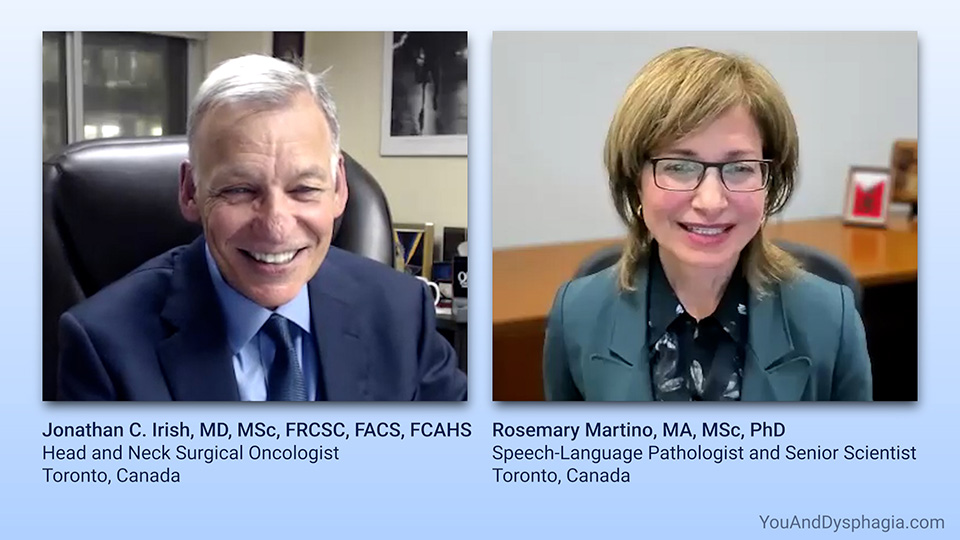
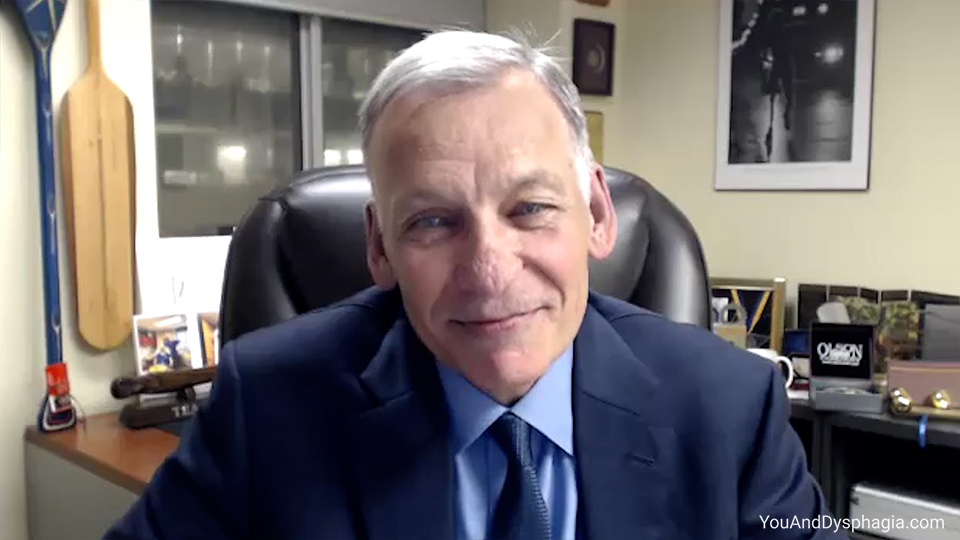
Dr. Jonathan Irish, otolaryngologist-head and neck surgeon at Princess Margaret Cancer Centre in Toronto, explains that dysphagia is the medical term for difficulty swallowing and describes the symptoms people may experience, including pain when swallowing, coughing, choking, heartburn, or the sensation that food or liquids are stuck or coming back up into the throat or mouth. He explains the two main types of dysphagia: oropharyngeal dysphagia, which affects the mouth and throat, and esophageal dysphagia, which affects the esophagus. He also reviews common causes of dysphagia, including stroke, neurological diseases, gastroesophageal reflux, inflammatory conditions, medications, head and neck cancer, and side effects from cancer radiation treatment.
Watch now
How do we swallow?
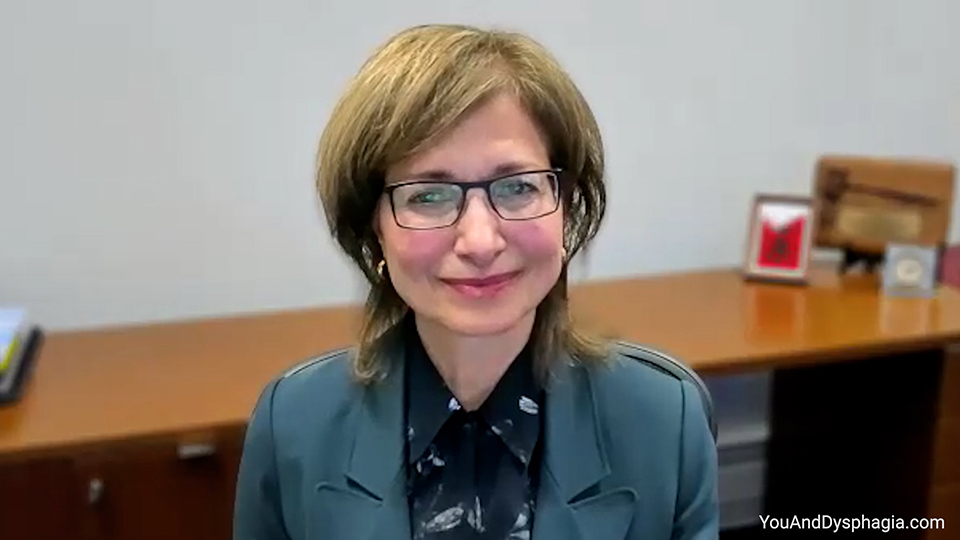
Dr. Rosemary Martino, professor and chair of the Department of Speech-Language Pathology at the University of Toronto, explains how swallowing works and why it is such a complex process. She describes how swallowing involves about 30 different muscles and multiple nerves working together under the control of the brain. Food is first chewed in the mouth, then moved by the tongue and throat muscles through the throat and into the esophagus, which carries it to the stomach. Dr. Martino explains that swallowing depends on precise coordination between the brain, nerves, and muscles, and that disruptions at any stage can lead to swallowing difficulties.
Watch now
What are the signs and symptoms of dysphagia?
In this video, otolaryngologist head and neck surgeon Dr. Jonathan Irish provides an overview of the common signs and symptoms of dysphagia, or difficulty swallowing. He explains that people with dysphagia may experience coughing or choking while eating or drinking, the sensation of food getting stuck in the throat, pain or discomfort when swallowing, or difficulty starting a swallow. He also discusses other warning signs, including a wet or gurgling voice after eating and unexplained weight loss caused by poor nutrition related to swallowing difficulties.
Watch now
What are some common problems that may develop because of dysphagia?
In this video, speech-language pathologist Dr. Rosemary Martino provides an overview of the serious health and emotional problems that can develop because of dysphagia. She explains that when food or liquids enter the lungs instead of the esophagus, it can lead to lung infections or aspiration pneumonia. Dysphagia can also cause malnutrition, dehydration, and weight loss because people may struggle to eat enough food or drink enough fluids. Dr. Martino also discusses the emotional impact, including social isolation, depression, and reduced quality of life.
Watch now
How is dysphagia diagnosed?
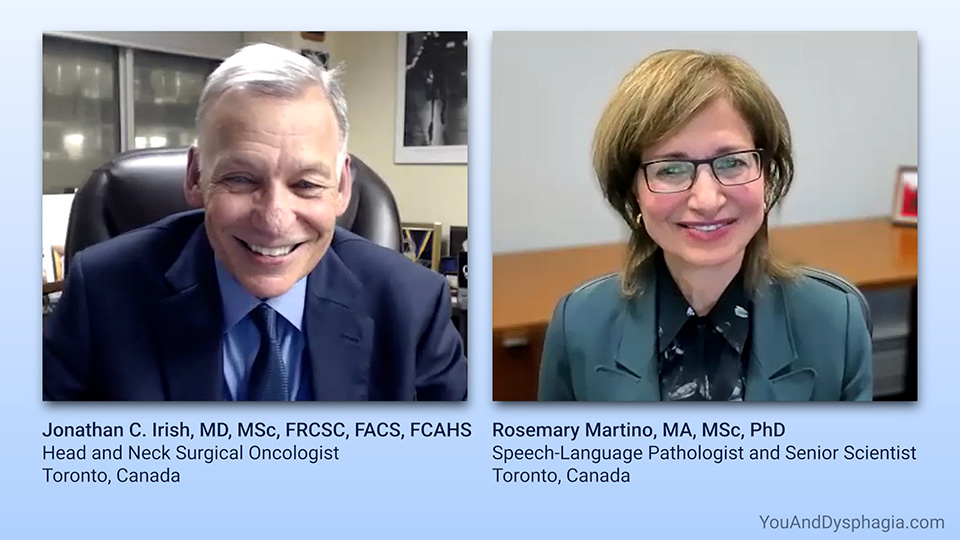
Dr. Jonathan Irish, professor and head of the Department of Otolaryngology-Head and Neck Surgery at the University of Toronto, explains that diagnosing dysphagia often involves a team of specialists, including otolaryngologists, or ear, nose, and throat (ENT) specialists, speech-language pathologists, and gastroenterologists. He describes several tests used to evaluate swallowing problems, including a videofluoroscopy swallowing study, which uses X-rays to observe swallowing, and FEES (fiberoptic endoscopic evaluation of swallowing), where a small camera is passed through the nose to examine the throat during swallowing. He also discusses manometry, a test that measures muscle strength and coordination during swallowing. Dr. Irish notes that while some tests may feel uncomfortable, they are important for diagnosing and treating dysphagia.
Watch now
How is dysphagia managed and treated?
Dr. Rosemary Martino, senior scientist of the Department of Speech-Language Pathology at the University of Toronto, explains that dysphagia is managed and treated using two main approaches: compensatory strategies and active treatment. Compensatory strategies provide short-term support, such as sitting upright, taking small bites or sips, modifying food textures, or using techniques like a chin tuck to help food move safely to the stomach. Treatment focuses on strengthening the muscles used for swallowing through targeted exercises that treat and change the swallow. She also highlights the growing role of prehabilitation, which involves starting swallowing therapy before head and neck cancer surgery. Dr. Jonathan Irish adds that treating underlying causes, such as head and neck cancer, can also improve swallowing outcomes.
Watch now